
A founder wraps a chatbot in a new interface and calls it an agent. Real ai agent startups build software that plans, chooses tools and acts with varying autonomy, and they prove it on a single buyer’s metric.
The sections below correct the most common misunderstandings, then move from agent type to MVP with funding and risk checkpoints. For the wider infrastructure decision, see our guide to the best tech stack for a startup.
What AI agent startups actually build
An AI agent startup sells software that performs tasks and makes decisions with varying degrees of autonomy, according to virtualworkforce.ai. Entrans describes these systems as goal-oriented entities that plan, use tools and act inside business systems. The word “agent” is stretched to cover very different products, so a few assumptions are worth testing before you build or invest.

| Common assumption | What the evidence supports | What to do |
|---|---|---|
| An agent is a chatbot or a rules-based automation with a new interface | Agents create an action plan for themselves and choose tools according to schemas, whereas RPA follows fixed rules | Demonstrate planning and tool choice in the demo, not only scripted replies |
| Autonomy is all or nothing | Agents operate with varying degrees of autonomy | Decide per task how much the agent may do unaided |
| The language model is the product | A typical architecture also includes a prompt or template, retrieval, memory, an orchestrator and an execution loop | Budget engineering time for the whole loop, not only the model call |
| A larger model removes hallucination | Retrieval keeps outputs grounded and reduces hallucination | Ground the agent in your buyer’s own documents and data |
Definitions and architecture components come from virtualworkforce.ai, and the agent-versus-RPA contrast from Entrans.
Three habits separate a company from a demo:
- Pick the autonomy level deliberately. A triage agent that suggests and a transactional agent that acts need different safeguards, so label which one you are building.
- Treat the model as one component. The large language model supplies reasoning, but retrieval, memory and orchestration decide whether the agent is reliable enough to sell.
- Sell a result, not an architecture. Buyers respond to a measured outcome on a task they already own.
Use cases that suit an agent startup
The use cases that work best are bounded, repeatable tasks with a metric the buyer already watches. virtualworkforce.ai recommends customer support triage, sales lead qualification, developer automation and HR screening as startup starting points. Idea research by The VC Corner drew on conversations with founders, operators and investors across ten industries, which shows how widely the pattern applies.
| Use case | What the agent handles | Planning use |
|---|---|---|
| Customer support triage | Sorting and routing incoming requests | Suits teams with a visible queue; measure time saved per task |
| Sales lead qualification | Screening inbound leads before a person responds | Suits sales teams with high inbound volume; track throughput uplift |
| Developer automation | Repetitive engineering chores | Easy to test internally first because you are the first user |
| HR screening | First-pass review of applicants | Needs careful human review and data handling before it touches real candidates |
The use-case list comes from virtualworkforce.ai; the planning notes are editorial judgement.
Choose the use case where you can reach the person who owns the metric and where a wrong answer is cheap to catch. Customer triage and lead qualification usually meet both conditions. HR screening affects people directly, so it demands more oversight before launch.
Tech stack options for a first agent
A typical agent stack combines a model, a prompt or template, retrieval (RAG), memory, an orchestrator and an execution loop, as virtualworkforce.ai sets out. Your choices are about which open frameworks and builders fill those slots, not about building everything from scratch.
| Option | Best fit | Planning use |
|---|---|---|
| LangChain with LlamaIndex | Knowledge-driven agents | Start here when the agent must answer from your buyer’s documents |
| Pinecone or Weaviate | Vector stores that pair well with LangChain and LlamaIndex | Pick one to hold retrieval data |
| Rasa | Conversational control | Suits agents where dialogue flow must stay tightly managed |
| AutoGen or CrewAI | Orchestration frameworks for multi-agent interactions | Defer until a single agent clearly cannot do the job |
| FlowiseAI | Open-source builder suited to MVPs and quick iteration | Fast way to test a workflow idea |
| Superagent | Supports multiple LLMs | Useful when you want to compare models without rewriting the agent |
Framework and vector-store pairings come from virtualworkforce.ai, and the builder descriptions from Azilen.
The sensible default is the simplest stack that grounds the agent in real data. Move to multi-agent orchestration only when you have evidence that one agent cannot cover the workflow. Hosting is a separate decision, covered in our guide to the best cloud hosting for startups.
Business model and funding checkpoints
An agent business model is easiest to defend when the price links to an outcome the buyer already tracks. virtualworkforce.ai names four ROI metrics for agent pilots: time saved per task, reduction in manual errors, throughput uplift and customer satisfaction lift.
- Choose one metric per pilot. A single measured improvement is easier to turn into a contract than a list of vague benefits.
- Show the baseline. Investors and buyers can only judge an improvement against the starting point recorded before the agent ran.
- Keep the pilot report short. State the task, the metric, the result and what changed in the agent between runs.
Treat funding as a checkpoint that follows evidence. Raise or pitch once the pilot data exists, since a demo alone does not show that the agent keeps working in a buyer’s systems. Investors’ interest also depends on how well you have handled the risks below.
Risks and regulation
The main risks are wrong or ungrounded outputs, agents acting on edge cases they should not handle, and compliance gaps that appear after scaling. The mitigations are practical and can be built into the MVP.
- Ground the model. Retrieval keeps outputs grounded and reduces hallucination, according to virtualworkforce.ai.
- Keep a person in the loop. A human-in-the-loop fallback catches edge cases and creates labelled data for continuous improvement.
- Put governance ahead of growth. The same source advises implementing governance, controls and audits before scaling.
For regulation, treat the oversight layer as part of the product, not paperwork added later. Logged decisions make it possible to review what an agent did, which matters to both enterprise buyers and the investors reading your risk section.
MVP roadmap from agent type to pilot
Start by choosing the agent type and use case, then build the smallest loop that can move a single metric. Everything after that is measurement and hardening.
- Choose the agent type and buyer. Pick one use case from the table above and name the person who owns the metric.
- Select the stack. Use a framework or builder from the options above that matches the task, such as a knowledge-driven stack for document-heavy work.
- Build the prototype. virtualworkforce.ai suggests a prototype in 2–4 weeks to validate core hypotheses.
- Run a pilot. The same source recommends a pilot for 1–3 months to measure KPI lift and gather operational feedback.
- Add controls. Put the human-in-the-loop fallback, governance and audits in place before widening access.
- Decide on funding or scaling. Use the pilot results as your evidence for contracts or investors.
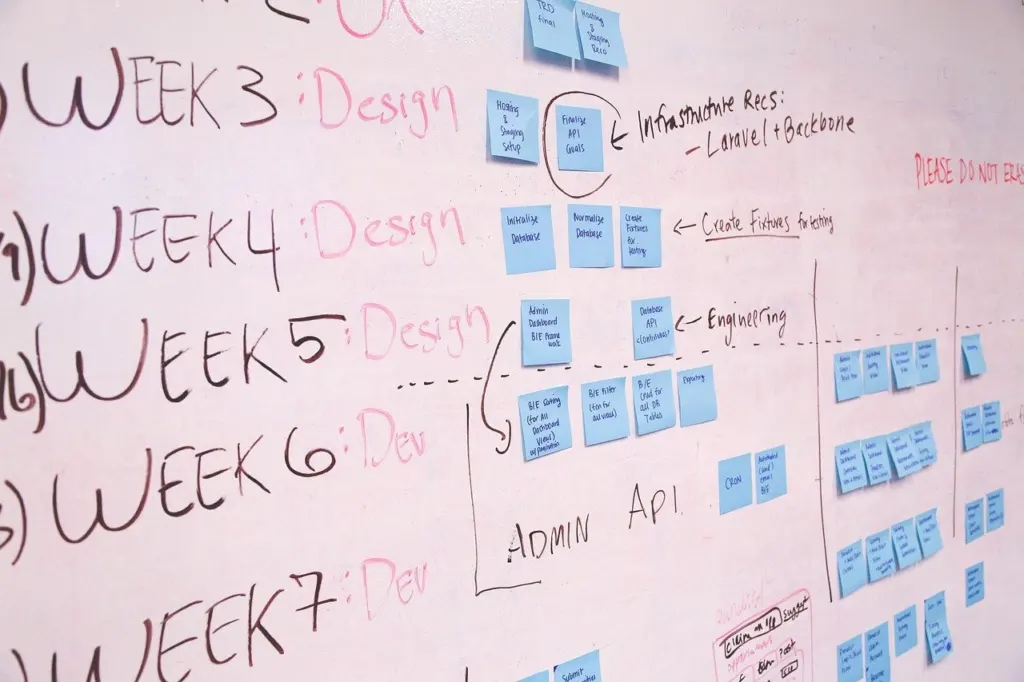
If your team is distributed, coordination tooling affects how quickly you can iterate; Remote Team Management Software: How To Choose, Implement, And Measure Success In 2026 – Startalliance covers how to choose and measure it.
Frequently asked questions
| Question | Answer |
|---|---|
| Do AI agent startups need to plan for GDPR? | Yes, if you serve EU users. virtualworkforce.ai advises planning for EU/GDPR requirements and for data residency if needed. |
| Is there a free way to prototype an agent? | FlowiseAI is open-source and free to use and modify, and Azilen lists it as suited to MVPs and quick iteration. |
| Which stores can hold agent memory? | Superagent lets you use Redis or PostgreSQL for memory and job queues, per Azilen. |
| What should an audit trail record? | The enterprise builder Dust.tt advertises a full audit trail showing every query, response and decision, as described by Azilen. |