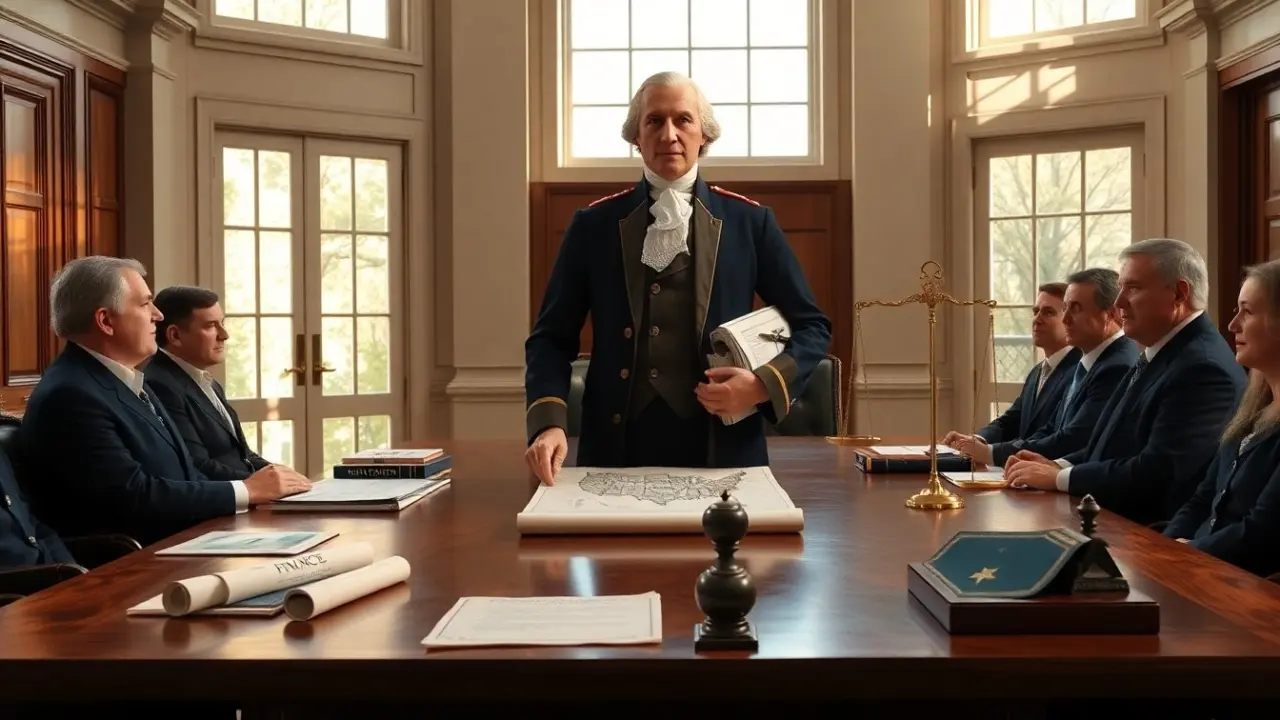
George Washington leadership qualities shaped early America and guided fragile institutions. He led troops, held office, and set rules for civic power. Historians praise his character and choices. This article lists seven clear traits. Each trait shows how he moved from soldier to statesman. Readers will get concrete examples they can study and apply. Below we expand beyond lists to show how those qualities operated in practice: how Washington balanced immediate military needs with long‑term political stability, how personal habits became public norms, and how institutional choices he made—the cabinet, retirement from power, and a disciplined military—helped the republic survive its precarious first decades.
Key Takeaways
- George Washington’s leadership qualities combined integrity and restraint, earning public trust without relying on formal power.
- His strategic vision prioritized national unity, balanced federalism, and long-term stability.
- Washington led by example through courage, humility, and dedication to public service, setting standards for future leaders.
- He skillfully built teams and institutions by delegating effectively and promoting merit-based leadership.
- Washington’s leadership style established important norms, including the peaceful transfer of power and limits on authority.
The Big Picture: Washington’s Leadership Style And Legacy
Washington combined steady presence with practical limits on power. He defined leadership by example and by law. He refused permanent titles and returned power to civilians. He built trust among rivals and allies. He used restraint to protect the new republic. He set a pattern for peaceful transfer of authority. His leadership style mixed military command and political moderation. Many leaders study his record for lessons on legitimacy and public trust. In practical terms, that meant moving deliberately: he preserved the Continental Army through harsh winters, then translated military authority into constitutional norms as the presiding officer at the Constitutional Convention and as the first president. His legacy is therefore not only battlefield successes but also institutional decisions—creating precedents for executive conduct, the delegation of authority, and the limits of personal ambition—that later leaders could point to when navigating crises.
Personal Character: Integrity, Restraint, And Moral Authority
He acted with clear integrity in private and public life. He paid his debts and kept promises. He avoided corruption and public spectacle. He accepted criticism without retaliation. He showed restraint by declining lifetime power. His restraint reinforced his moral authority. People trusted his word in councils and on the battlefield. This trust widened his influence without formal coercion. His steady conduct anchored fragile political institutions. Those personal habits translated into concrete political effects: colleagues were willing to follow him because they believed he would act fairly, and political opponents were less willing to use extraordinary measures against a leader who visibly subordinated personal gain to public duty. Over time, this moral authority helped populate new institutions with officials who accepted turnover and accountability as normal.
Strategic Vision And Decision‑Making
He set long‑term aims for national survival and unity. He prioritized a balanced federal system and stable finances. He supported plans that strengthened commerce and defense. He timed actions to match resources and public will. He weighed military risk against political cost. He accepted advice and then made firm choices. He favored clear goals over flashy gains. That focus guided the army and the government toward durability. Examples include his insistence on maintaining a standing force sufficient for defense but limited enough to avoid provoking popular fear of a military dictatorship, and his backing for financial measures (as president) that aimed to stabilize the currency and public credit. Washington’s decision‑making process combined consultation with advisers, careful assessment of logistics and public sentiment, and a readiness to act decisively when continued delay would imperil the nation.
Leading By Example: Courage, Humility, And Public Service
He exposed himself to danger with his troops. He rode ahead on reconnaissance and shared cold watches. He avoided ostentation and lived simply by public standards. He accepted blame when plans failed. He praised others and rarely sought credit. He treated office as service rather than privilege. He left office to show that power has limits. That behavior set a practical standard for future officials. In leadership practice this meant cultivating morale through visible presence, acknowledging setbacks to preserve trust, and modeling restraint so that political norms—such as civilian control of the military and peaceful succession—would outlast any single individual. Those habits also encouraged subordinates to emulate civic duty rather than personal aggrandizement.
Building Teams And Institutions: Delegation, Organization, And Political Skill
He selected skilled aides and built a functional cabinet. He delegated tasks and held subordinates accountable. He organized supply lines, staff roles, and military logistics. He used written orders to reduce confusion. He negotiated with Congress and with state leaders to secure funds and troops. He balanced competing interests with compromise and firmness. He promoted officers based on merit and need. These practices turned fragile groups into coordinated teams and durable institutions. In civilian government he translated those habits into establishing working relationships with congressional leaders, setting precedents for executive correspondence and record‑keeping, and supporting legal and administrative structures—measures that made the national government more predictable and effective. By training and empowering competent subordinates, Washington ensured that institutions could function when he was not personally present, a key ingredient for long‑term stability.